This page may need improvement. An automated review flagged possible editorial issues. This assessment is subjective, so editors should use their own judgment. Learn more.
The Education for Sustainable Living Program (ESLP) is a collaborative interdisciplinary effort to realize a sustainable community throughout the University of California. This course is structured as a 2-unit seminar series, hosting guest lectures by renowned educators, authors, environmentalists, and progressive thinkers. Lectures are open to the public free of charge to encourage collaboration between the campus and local community. The course encourages reflection upon and analysis of the principles of sustainability (EQUITY, ECONOMY, ENVIRONMENT, EDUCATION), and is designed to encourage dialogue between students, faculty, staff, administration, local community, and the entire UC system.For 2 additional units, students have the option to form Action Research Teams (ART's) in partnership with guest lecturers, faculty, administration, and community members to implement tangible change. These groups focus on campus specific issues such as sustainable transportation, socially & environmentally preferable purchasing, energy consumption reduction, waste reduction/prevention, and green building. Such experiential learning inspires participants to internalize the concept of sustainability, and carry it in practice beyond academia into a greater society. Students may enroll in this course to receive two units of academic credit for selected departments, or may opt to take the course for four units by participating in the Action Research Teams.Additionally, this lecture series is open to everyone in the Davis community.We are putting out a call for ART (Action Research Team) leaders! This is a great opportunity to work with students, staff, and faculty to implement change on the UC Davis campus. If you were interest in leading an ART come to the farmers' market on Saturdays at 12pm in Winter Quarter 2013 and email Emili ([email protected]) === Objectives for Course === I. Explore the meaning of "sustainability." II. Explore specific ways to apply the concepts of sustainability to daily lives and to our university. III. Encourage communication and collaboration between all members of the campus community to envision, initiate, and enact tangible change locally, nationally, and globally. IV. Challenge participants to think beyond the short term interests that currently drive global systems; examine how our present decisions and action affect future generations; apply a cross disciplinary systems level analysis to our community decisions and consider their regional and global effects. === Schedule for 2013 === *The speakers and schedule were subject to change due to reasons outside of our control April 3: Introduction to Sustainability & Sign Up for ARTs ART Leaders: Maisie Borg (Aquaponics), Issy Demilian (E-Waste Recycling), Tanzi Jackson Dani Doedens and Ian Lee (Coal Divestment), Melanie Lataste & Derek Downey (Bee Sanctuary: a collaborative space for people and bees), Melanie Lataste (Seeds on Wheels)April 10: Marcus Eriksen & 5 Gyres Institute Marine Pollution and Plastic Art GalleryApril 17: Alberta Tar Sands and Tar Sands Blockade Garth Lenz, PhotojournalistApril 24: Aquaponics Erick Mandu from Kijani Grows http://www.kijanigrows.com/May 1: Globalization, Post-Capitalism, and the Koch Brothers Victor Menotti from The International Forum on Globalization http://www.ifg.org/May 8: Sustainable Agriculture Panel Full Belly Farm, Ryan Galt, Mark Van Horn, Jeff Mailes, TBAMay 10, 11, 12: Whole Earth Festival ESLP community members and Action Research Teams are encouraged to staff a booth at theWhole Earth Festival (aka 'WEF')and generally, enjoy and learn from the festival.May 15: Indigenous Rights and Environmental Justice Conversations with the EarthMay 22: Social Justice Activism Panel TBAMay 29: ART PresentationsJune 5: DIY, “Learn your Community and Campus Resources Day” Featuring the Craft Center and Aggie Re-Use Store=== Action Research Teams for 2013, Student and Community Lead === * Aquaponics - Maisie Borg, [email protected]
E-Waste Recycling - Issy Demilian
Volunteer Gardening Team -
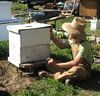
Seeds on Wheels - Melanie Lataste, [email protected] Help the Davis Seed Savers Alliance build a portable seed cabinet structure “Seeds on Wheels” with recycled materials for the Domes Seed Library! We are looking for a user-friendly design with a bike hauling system. Then, reorganizing the seeds, figuring out interesting seed categories and creative labels. We will finalize the project with a seed event introducing the Domies and Davis community to the “Seeds on Wheels” Lending Library. The goal is to provide a convenient and free access to seed everywhere in Davis. The Davis Seed Savers will teach one aspect of saving seed each week. No specific skills are required to participate except enthusiasm and creativity!” * The Davis Bee Sanctuary: a collaborative space for People & Bees - Melanie Lataste & Derek Downey, [email protected], [email protected] Help the Davis Bee Collective transform the Davis Bee Sanctuary garden into an educational and creative space introducing native bees & their habitat, 3 different hive designs & natural beekeeping, medicinal herbs, and permaculture techniques. Map making, native bee habitat building and sign designing are the core features of the project, but students can also experiment natural beekeeping and permaculture gardening depending on their interest. The goal is to invite everyone to experience the joys of observing and learning about bees in a people-bee friendly environment. We will finalize the project with an event presenting the Bee Sanctuary to the Davis Community. For those who are afraid or allergic to bee stings, the designing, map and sign making do not overexpose students to bee encounter. * UC Fossil Fuel Divestment Campaign with CSSC - Ian Lee, Dani Doedens & Tanzi Jackson, https://www.facebook.com/pages/Fossil-Free-UC-Davis/218054671666295?fref=ts
Wildlife Survey (Sustainable Research Area) - Lucas Hill, [email protected]
"UCD Food Recovery Network" - Stefanie Scott & James Kreidler, [email protected] Help feed the community and make UC Davis more sustainable! The Food Recovery Network (FRN) is actually a nation-wide organization that's goal is to help with diverting overproduced and left over food from university food systems to places that help feed those that are in need (more info http://www.foodrecoverynetwork.org ). UC Davis has just recently become a chapter of the Food Recovery Network, and we are officially launching the program this Spring quarter through the UCD FRN club. The goal is to have students participating in the system by delivering the food from the campus dining commons to the donation locations, and have fun doing it. Participants will also be able to help with developing the system (finding out ways to improve it), researching new places and creative ways to deliver food and feed more people, figuring out how to keep the system going over the Summer, and are encouraged to come to club meetings. It is preferred that students have a car to make deliveries, but biking will suffice. ----=== Schedule for 2012 === *The speakers and schedule were subject to change due to reasons outside of our control 4/4 - Introduction and World Cafe4/11 - John Harvey and Mitch Sears + ART introductions http://cee.engr.ucdavis.edu/faculty/harveyMitch Sears is the City of Davis Sustainability Programs Coordinator4/18 - Bea Johnson Minimizing Impacthttp://zerowastehome.blogspot.com4/25 - CSSC Move to Amend and End Coal Campaigns + Bruce Reznik Lobbyinghttp://www.pcl.org/about/breznik.htmlhttp://www.sustainabilitycoalition.org/tag/move-to-amendhttp://www.sustainabilitycoalition.org/_featured/spotlight-on-the-cssc-end-coal-campaign5/2 - Melissa Nelson Indigenous Perspectiveshttp://www.bioneers.org/presenters/melissa-nelson5/9 - Melanie Madden Agricultural Land Preservation5/16 - DIY Week5/23 - Garth Lenz The Real Price of Oilhttp://www.ted.com/talks/garth_lenz_images_of_beauty_and_devastation.html5/30 - Portland City Repair Celebrationhttp://cityrepair.org/6/6 - Sustainable Scavenger Hunt for Prizes, End of the quarter evaluations and discussion === Schedule for 2011 === 3/30 -Nikki Henderson2010 ELLE Gold Award and executive director, People’s Grocery in West Oakland, California4/06 - World Cafe and ART introductions4/13 -Dr. Geerat VermijIntersections of Ecology and Economy1992 MacArthur Fellow and Distinguished Professor of Geology, UC Davis4/20 - Marcela Oliva - The End of Education - as we know itProfessor, Architecture and Environmental Design, L.A. Trade Technical College4/27 -Ciudad de Luces and Micah PosnerCiudad de Luces- Latino bicycle collective from LAMicah Posner- director, People Power5/4 - Chris Jones author of a Carbon Footprint Calculator5/11 -Josiah CainPrincipal, Design Ecology5/18 -Greywater Guerillaseducators, designers, builders, and artists 5/25 -Kim Stanley Robinson2008 Time “Hero of the Environment” and science fiction writer (author of best-selling Mars Trilogy) 6/01 - Wrap-up and Action Research Team Presentations === Schedule for 2010 === 3/31 - Course Overview and Action Research Team Introductions4/07 - Food Waste and Recovery feat. DIVE: A film about living off of America's waste and a panel of community food waste/recovery leaders.4/14 -Katie Maynard4/21 - Engaging with Disengagement4/28 - Transportation5/05 -Coalition of Immokalee Workers5/12 -Community Services Unlimited5/19 -Dr. Tina Jeoh- Biofuels5/26 - TBA7/03 - Action Research Team Presentations and Wrap-up === Schedule for 2009 === 4/01 - Course Introduction & ART Introductions4/08 -Erik Knutzen- Urban Homesteading 4/15 -Matthew Wolf-Meyer- Medical Anthropology 4/22 -Frank Loge- Why Your Wastewater May Save Your Life 4/29 -Green For All- Creating a Green Collar Economy5/6 - Panel Discussion on Energy5/13 -John de Graaf- Taking Back Your Time 5/20 - Sharon Davison 5/27 -Stephen Wheeler- 6/03 - Action Research Team Presentations === Schedule for 2008 === 04-01 - Course Introduction04-08 - Kevin Wolfe - Sustainable LivingFile:Chem194.jpg 04-15 - Margot Higgins - Biomimicry - Nature as a Model, Measure, and Mentor04-22 - Joan Ogden - Hydrogen and Society 04-29 - Jason Mark - Sustainable Food Systems 05-06 - Veg Rev - Vegetable Oil Fuel Systems and Demonstration05-13 - Ellis Jones - Socially Responsible Consumption 05-20 - Nikki Henderson - Social Justice as a Pillar of Sustainability 05-27 - Action Research Team Project Presentations06-03 - Gary Snyder - Deep Ecology2007 course information had disappeared == Action Research Teams (ART's) == The purpose of these “action research teams” was to involve students in a process of experiential learning by collaborating with faculty, staff, administration, and community members to implement tangible change at our university. Action Research Teams are lead by graduate students, students, or even community members, and meet weekly, outside of scheduled class time. Students earn an additional 2-units (total of 4 units w/ lecture and ART) for participation in an ART. Specific areas of focus could include but are not limited to: * Food Systems & Agriculture
Community Development
Green Building
Transportation
Renewable Energy
Natural Resource Management
Environmental justice
Public policy
Religion and spirituality
Sustainable Consumerism The Education for Sustainable Living Program is requesting proposals from graduate students, undergraduates, or community members to lead action oriented research groups related to sustainability in our campus community. If you are interested in coordinating an “action research team” please express interest TODAY! If interested in leading an ART, we ask that a general project proposal (proposal form attached below) be submitted to Stephanie Castle at [email protected] by Wednesday, March 17th. After submission, proposals will be reviewed and organizers for the course will work with you to develop specific project guidelines by the end of winter quarter. Please contact Stephanie Castle ([email protected]) for more information! art 2011.pdfART+application+2011.docx === 2013 Action Research Teams === * Seeds on Wheels - Melanie Lataste, [email protected]
Bee Sanctuary: a collaborative space for People & Bees - Melanie Lataste & Derek Downey, [email protected], [email protected] === 2011 Action Research Teams === *To Be Announced === 2010 Action Research Teams === * Promoting Sustainability on the Radio - Dani Lee and Natalie Yahr, [email protected]
Agriculture, Food, and Intersectionality: Food Justice and Sustainability - Liz Fitzgerald and Janaki Jagannath, [email protected], [email protected]
Awareness, Availability, and Action with the Campus Center for the Environment - Lauren Jabusch, Jessica Bray, and Will Klein, [email protected]
First-Year Dorm Gardens - Sarah Stockdale, Will Klein, and Kara Fleshman, [email protected]
Orchard Park Gardens - Christopher Salam, [email protected] === 2009 Action Research Teams === * Developing the Low-Impact Vehicle Education (LIVE) Center - Bryan Jungers, [email protected]
Local Food Week/Real Food Week - Danielle Lee and Jen Heinlein, [email protected] === 2008 Action Research Teams ====== Topics for Action Research Teams from 2007 and 2006 === * Pedal Power - Built a pedal powered work desk to run your laptop while you cycle.
Open Sustainable Modern Media Distribution (Video/Audio Casting, aka Podcasting) - Creation & Distribution of lectures via modern media using Free Open Source tools
Green Business - Organized a Panel of Professionals on Green Business in Practice
Sustainable Food Systems - Surveyed Coffee House patrons about their preferences and knowledge of Organic, Fair Trade food.
Sustainable Food Systems II - How far does it take food to get to the table, and how do you measure the global impact.